J. Matthew Thomas
'trash embroideries'
2025 - 2026 Series
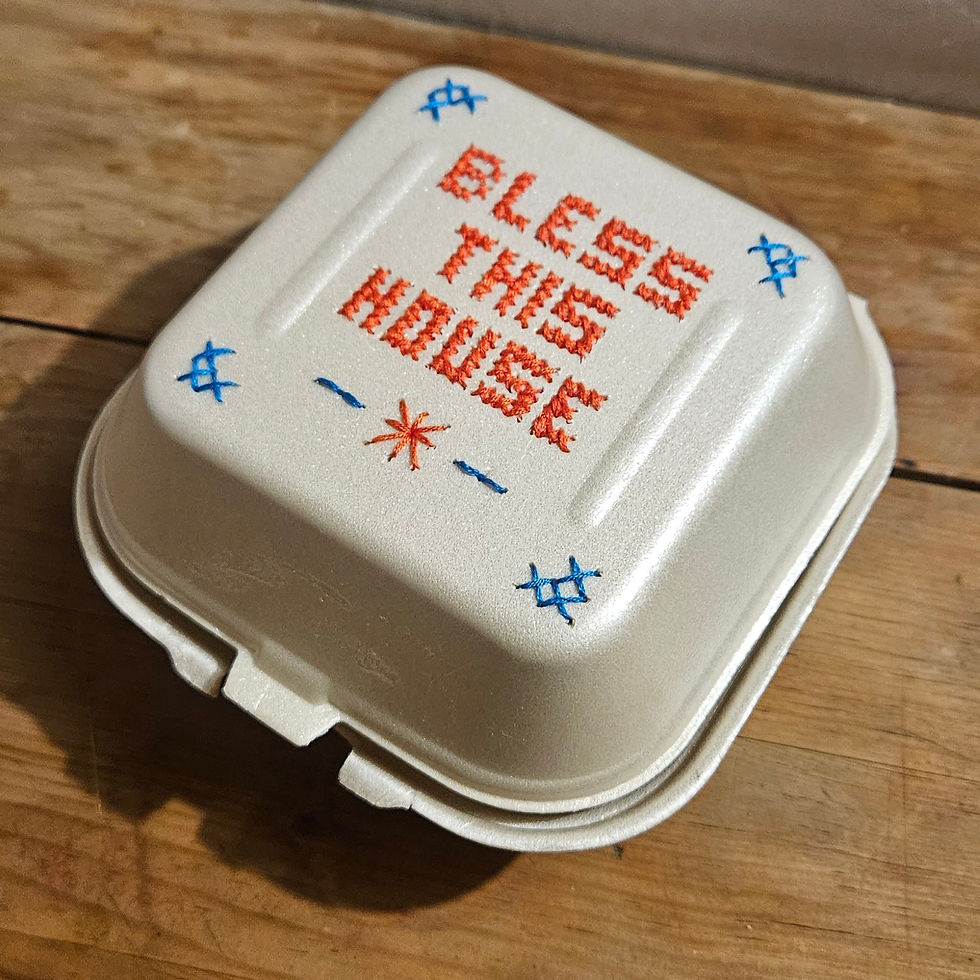
2025 Repurposed Styrofoam to-go Container, embroidery floss. 5.5 x 5.5 x 3 in
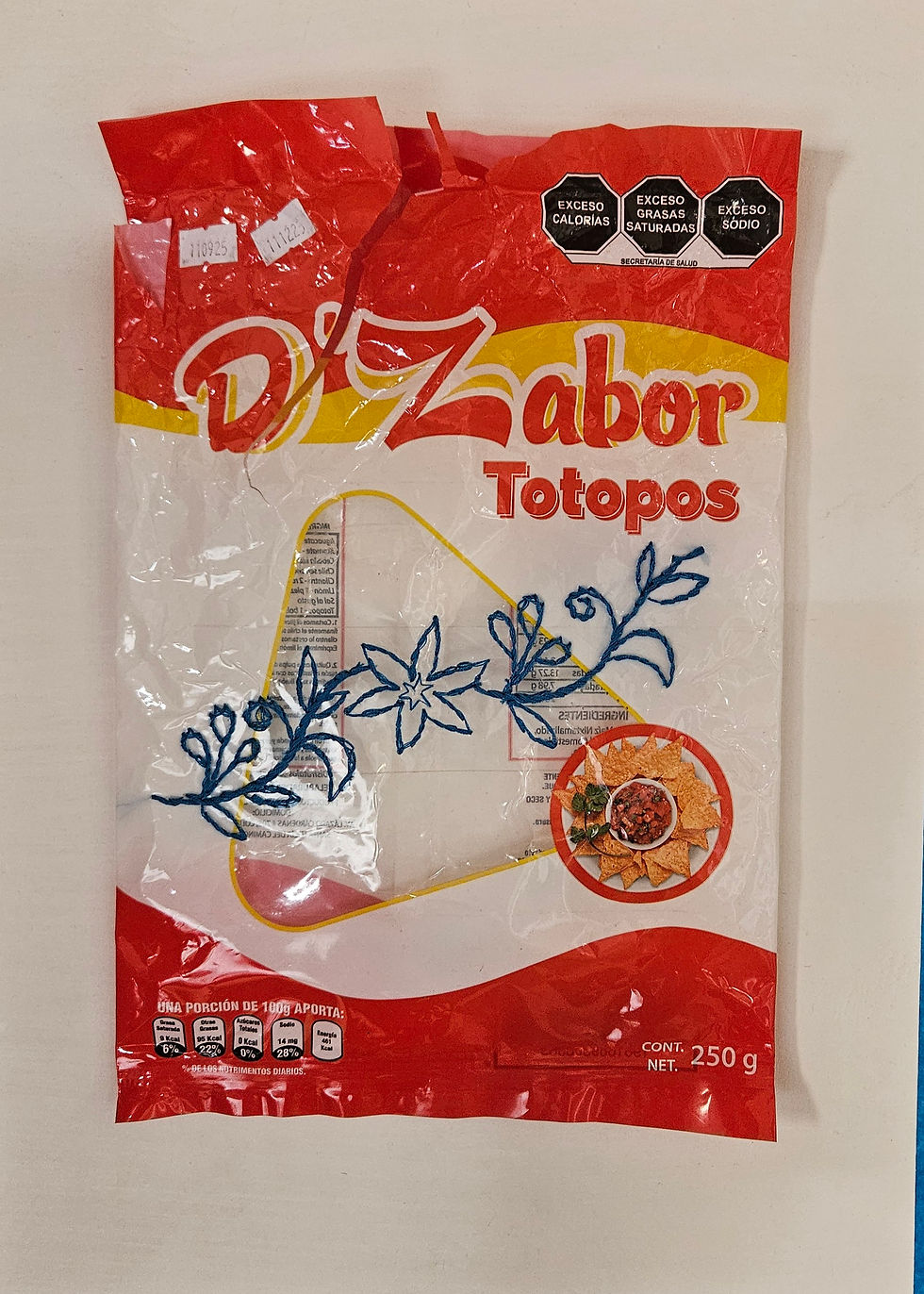
2025 Repurposed chip bag, embroidery floss. 9 x 13.25 in
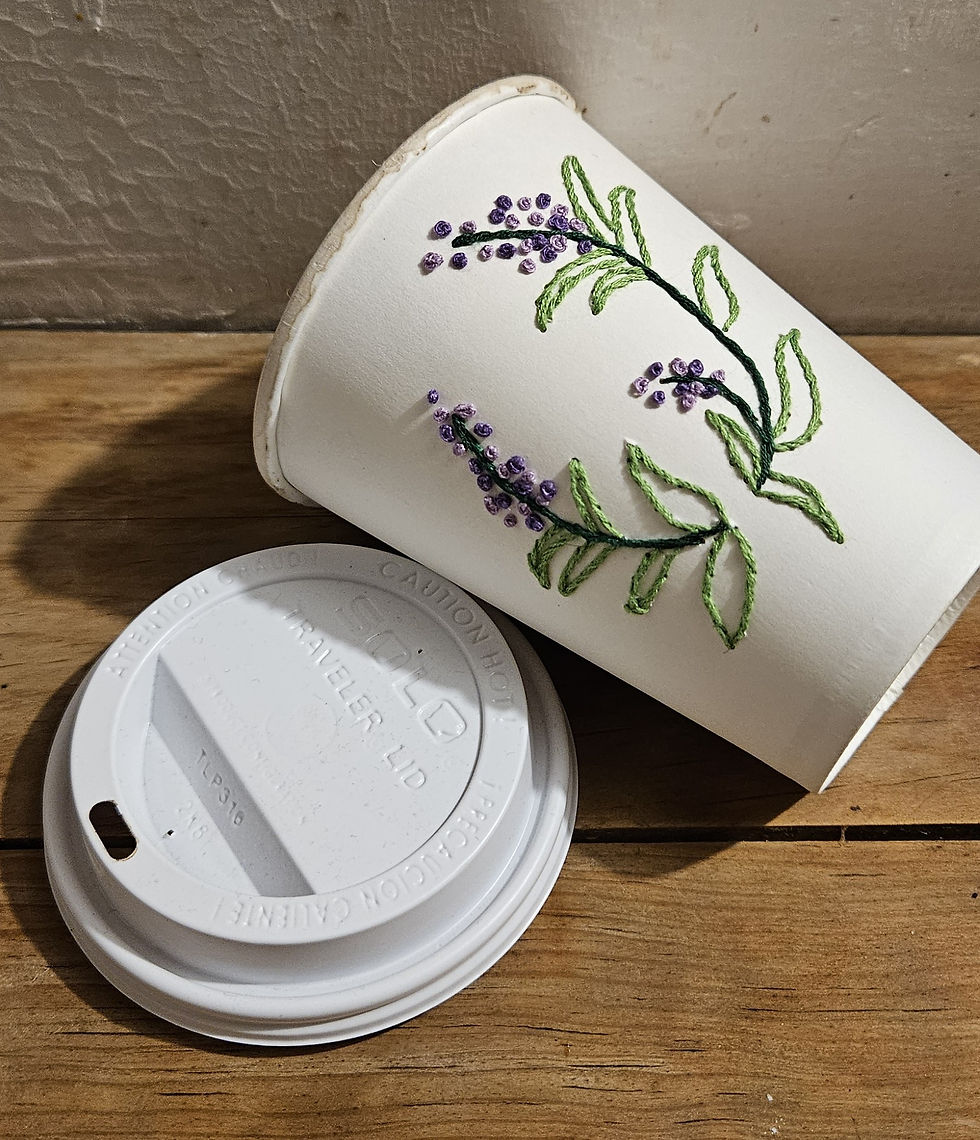
2025 repurposed paper coffee cup, embroidery floss 3.5 x 3.5 x 4.25 in
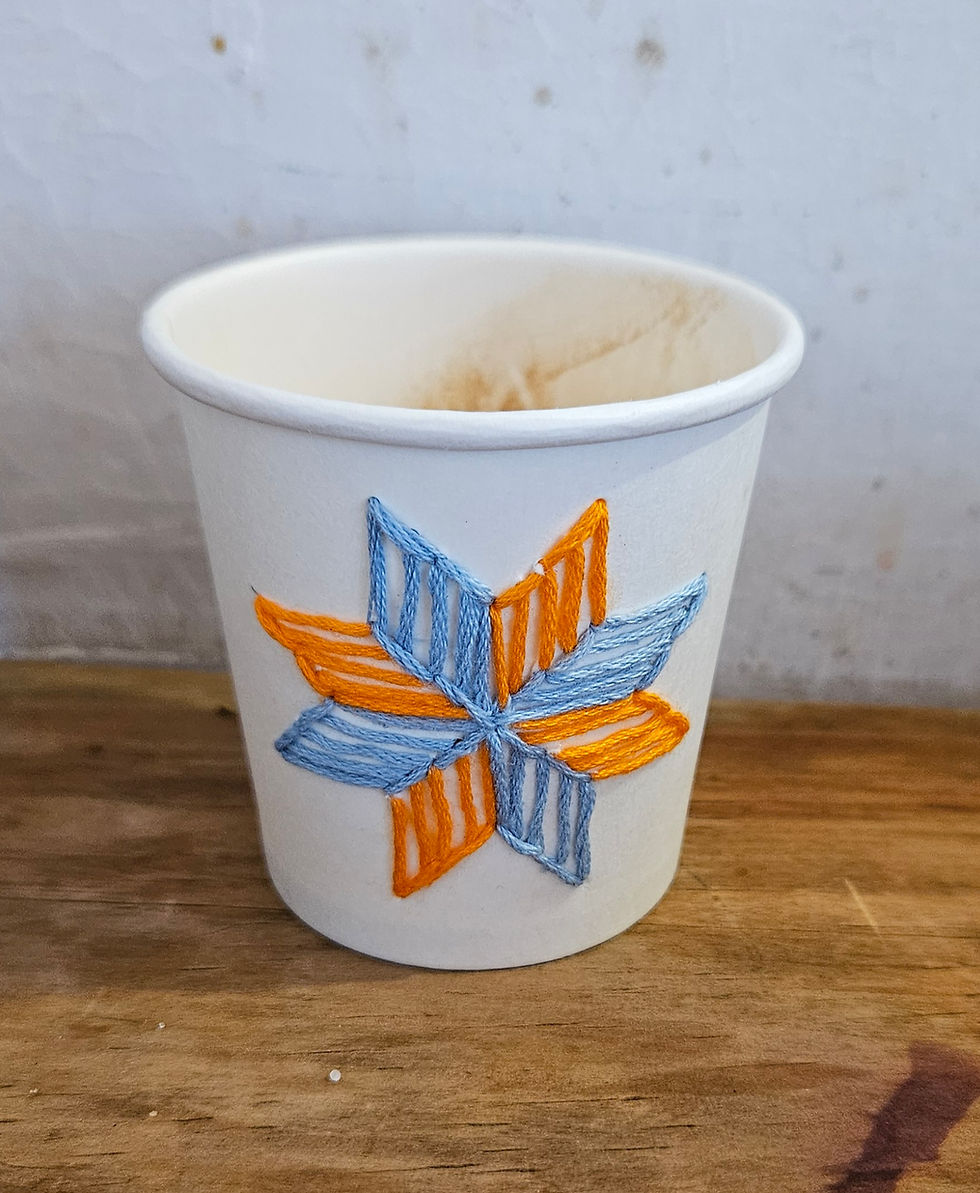
2025 Repurposed paper espresso cup, embroidery floss 2.5 x 2.5 x 2.25 in

2025 Repurposed Cream Cheese packaging, embroidery floss 7.5 x 4.5 in
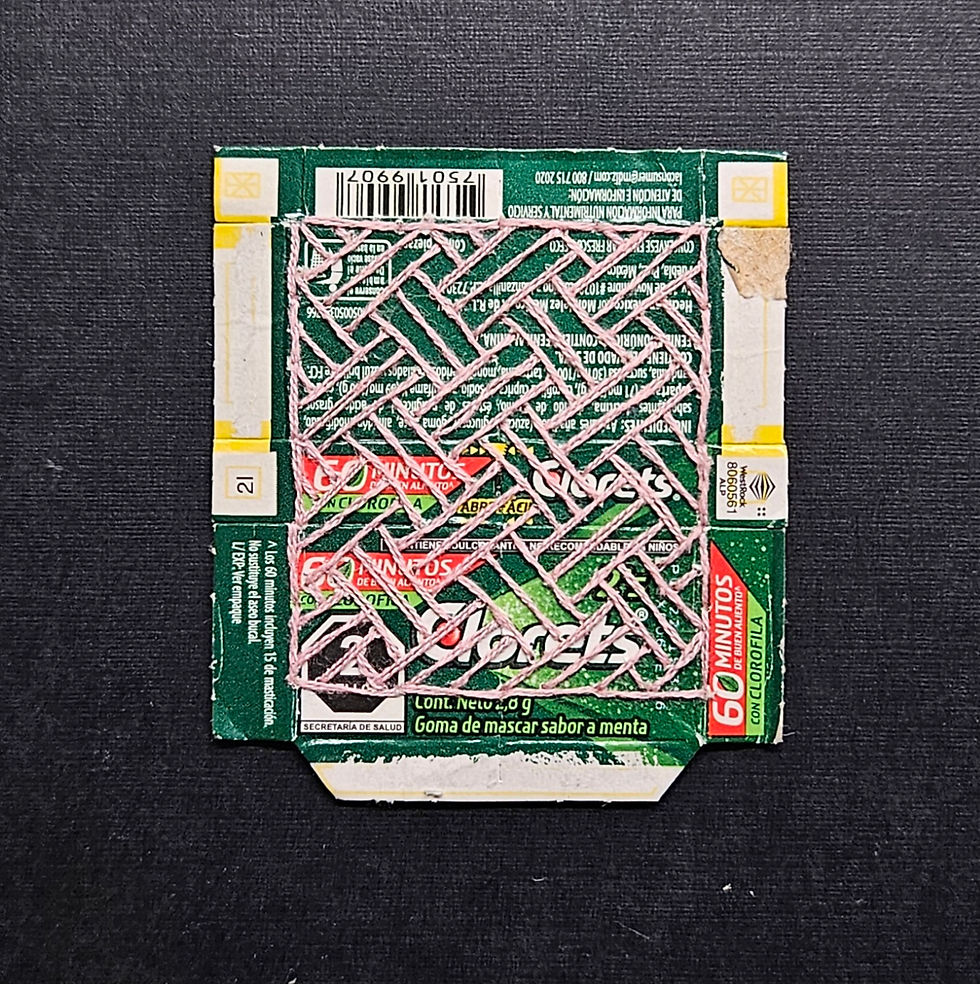
2025 Discarded candy package, embroidery floss 2.125 x 2.375 in 6 x 6 in framed

2025 Discarded Starburst candy wrapper, embroidery floss 2.5 x 1.75 in 6 x 6 in framed
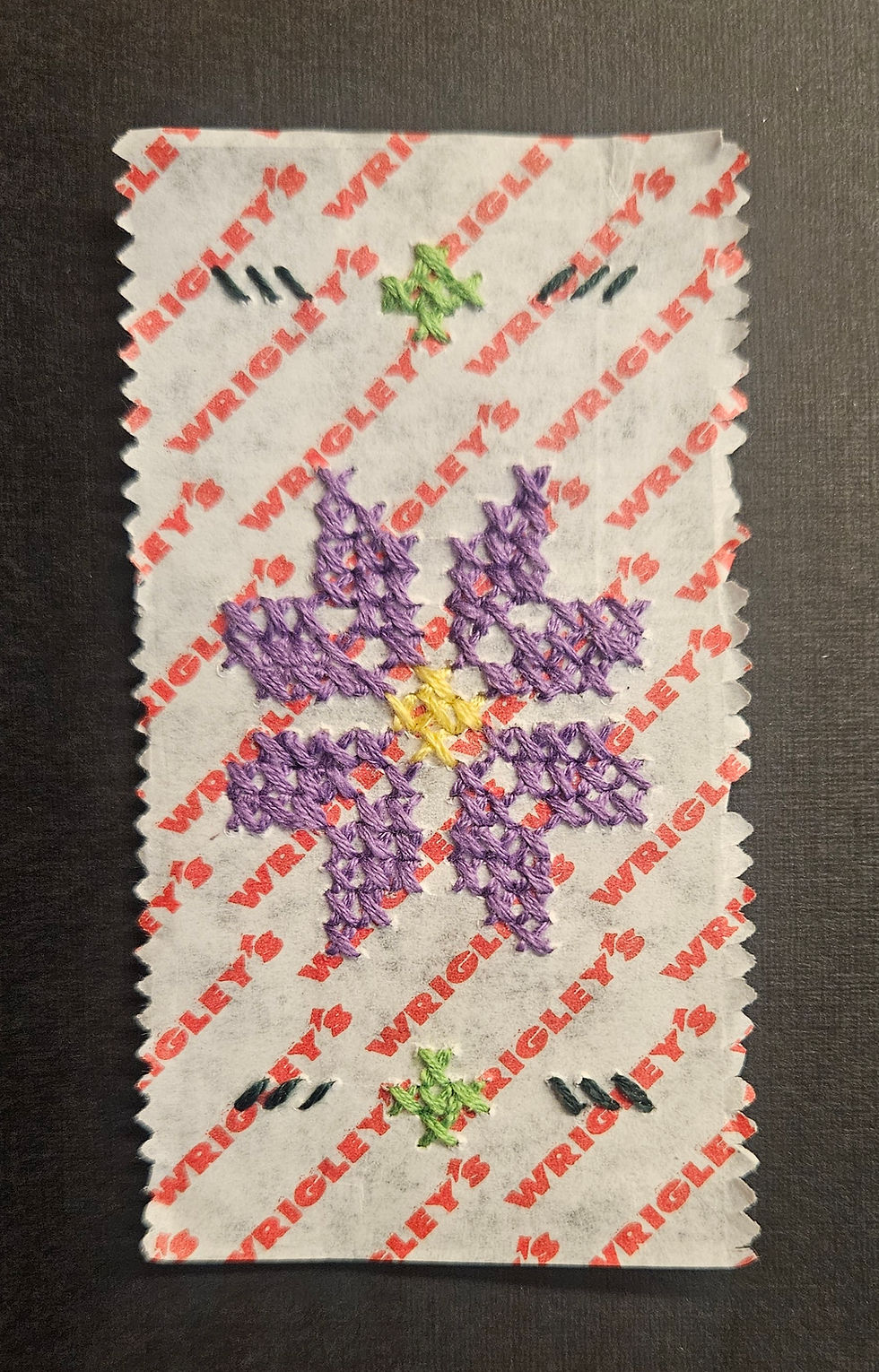
2025 Repurposed chewing gum wrapper, embroidery floss 1.875 x 3.375 in 6 x 6 in framed
Trash Embroidery reimagines the language of heirloom craft through the detritus of contemporary life. Traditionally, embroidery and needlepoint are labors of devotion—slow, deliberate acts meant to create something lasting, something worthy of being handed down through generations. In this work, I bring that same care to what is meant to be used once and thrown away: plastic bags, candy wrappers, packaging, and disposable cups.
By stitching into trash, I queer the conventions of craft and value. These discarded materials are treated as if they were keepsakes—handled with the same attention and reverence once reserved for linen or silk. These materials, marked by stains, creases, and decay, become sites of intimacy, attention, and care. The gesture blurs the boundary between the cherished and the forgotten, asking what it means to make something permanent from what was designed to be temporary.
Each piece becomes a quiet question about value—what do we choose to honor, and what do we so easily discard? In a culture built on speed and consumption, where even beauty is made to be replaced, Trash Embroidery lingers in resistance. It asks why we create at all if the result is destined for the landfill, and what might change if we treated the overlooked with the reverence of an heirloom.